Lightning can turn a clear afternoon into a serious risk for rooftop panels, exposed cables, and inverters. For Chinese solar installations, protection starts with understanding where surge current may travel—not simply adding a lightning rod. NREL’s technical guidance on photovoltaic systems emphasizes coordinated protection, including grounding, bonding, surge protective devices, and careful equipment layout. IEC 62305 also provides an established framework for assessing lightning risk and designing protection measures. These references offer useful engineering context, but site conditions still matter.
This guide explores how to protect solar energy systems from lightning through ten practical measures, from rooftop air terminals to DC-side surge protection and routine inspections. A useful principle from lightning-protection engineering is to give surge current a controlled path to earth while limiting dangerous voltage differences across connected equipment. I cannot verify a verbatim quotation from a named solar-lightning expert, so I will not invent one. That matters: confident-sounding advice is not the same as reliable evidence. A wet junction box, a long cable loop, or a loose bonding connection can change the risk in ways a generic checklist may miss. China’s varied terrain and storm exposure make site-specific assessment essential. No system is immune.
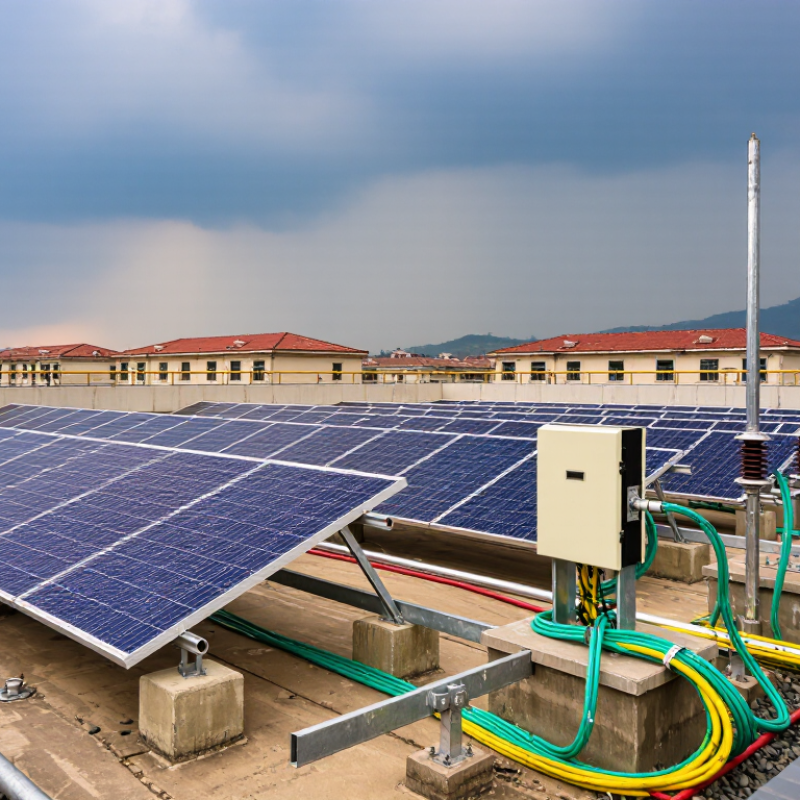
Across China, lightning exposure varies by region and season. Southern provinces often experience frequent summer thunderstorms, while coastal areas may combine lightning with typhoon-driven rain and wind. Northern and western sites can also face intense storms, especially across open terrain. Rooftop panels, metal frames, and long DC cable runs can become vulnerable points for electrical surges. Risk depends on site layout, not just local storm frequency.
Tips: Ask a qualified solar electrician to assess grounding and bonding, and select surge protection suited to the system design. Keep cable routes orderly and follow applicable electrical standards. Check protective devices during routine maintenance.
A nearby strike can induce voltage in wiring, even without hitting the panels directly. Surges may damage inverters, monitoring equipment, or household circuits, causing costly downtime. After a severe storm, look for loose connections, cracked equipment, or signs of water entry, but do not inspect live components yourself. Even a tidy installation is not invulnerable; protection reduces risk, not eliminates it. Site-specific assessment matters, and a generic checklist can miss local soil conditions, building height, or unusual cable routes.
| No. | Protection Method | Lightning Risk Addressed | Recommended Implementation | Relevant Conditions Across China | Inspection or Verification |
|---|---|---|---|---|---|
| 1 | Conduct a lightning-risk assessment | Uncontrolled exposure to direct strikes, nearby strikes, and induced overvoltage. | Evaluate site location, annual thunderstorm activity, terrain, building height, cable routes, grid connection, and consequences of system failure before design. | Particularly important in southern and southeastern provinces, areas affected by summer monsoons, mountainous regions, and exposed rural sites. | At initial design and whenever the site, array size, or electrical architecture changes. |
| 2 | Install a compliant external lightning protection system | Direct lightning attachment to rooftops, mounting structures, or nearby equipment. | Use air-termination, down-conductor, and earth-termination arrangements designed to maintain required separation from PV circuits and equipment. | Useful for rooftop systems, high-rise buildings, isolated agricultural sites, telecommunications locations, and elevated terrain. | Check during commissioning and inspect at least annually, or after a suspected strike. |
| 3 | Apply coordinated surge protective devices | Transient overvoltage entering through DC strings, AC feeders, communication lines, or the utility connection. | Select and coordinate SPDs for DC, AC, monitoring, and data circuits. Match voltage ratings, discharge capacity, backup protection, and installation location to the system design. | Important for long cable runs, large ground-mounted plants, rooftop arrays, and locations with frequent thunderstorms. | Check status indicators and connections during scheduled maintenance and replace devices after a major surge event. |
| 4 | Build a low-impedance grounding network | Dangerous potential differences and uncontrolled lightning current paths. | Bond module frames, mounting structures, inverter enclosures, equipment cabinets, and the lightning protection system where required by the design. Use short, straight conductors and suitable corrosion-resistant connections. | Soil resistivity can vary greatly between coastal, northern dry, southern humid, and plateau regions; the grounding design must be site-specific. | Measure continuity and grounding performance during commissioning and periodically thereafter. |
| 5 | Control separation distance and cable routing | Flashover and electromagnetic coupling between lightning conductors and PV wiring. | Keep PV cables away from down-conductors where practicable, minimize loop areas, route positive and negative conductors together, and follow the calculated separation distance. | Especially valuable on compact rooftops, industrial buildings, and sites where PV cables pass near structural lightning conductors. | Verify routing during installation, renovation, and troubleshooting. |
| 6 | Protect communications and monitoring circuits | Surges entering through RS-485, Ethernet, weather sensors, cameras, and control wiring. | Use suitable signal-line SPDs, shielded or fiber-optic links where appropriate, correct cable bonding, and segregated routing for power and data circuits. | Critical for unmanned plants, distributed rooftop systems, agrivoltaic sites, and installations with long outdoor communication cables. | Test communication availability and inspect protective devices during routine maintenance. |
| 7 | Use correctly rated and certified equipment | Insulation failure, DC arcing, or protective-device malfunction during a surge. | Confirm DC voltage, short-circuit current, impulse withstand, enclosure protection, temperature range, and compatibility of modules, inverters, combiner boxes, connectors, and SPDs. | Select enclosures and materials suitable for humid coastal areas, high-altitude sites, dust, salt exposure, and large temperature changes. | Review technical documentation during procurement and inspect equipment during commissioning. |
| 8 | Maintain connectors, cables, and enclosures | Arcing or insulation breakdown caused by loose connections, water ingress, ultraviolet exposure, or mechanical damage. | Use compatible connectors, correct crimping tools, sealed cable entries, secure cable support, and protective conduit where required. Remove damaged or incompatible components. | Important in regions with heavy rainfall, typhoons, coastal salt mist, strong ultraviolet radiation, or snow and ice. | Visually inspect at least annually and after severe weather; use thermal inspection when faults are suspected. |
| 9 | Monitor weather and isolate equipment safely | Personnel exposure and secondary damage during nearby thunderstorms. | Use reliable weather alerts, suspend non-essential outdoor work during thunderstorms, and follow safe isolation procedures. Do not manually disconnect PV circuits while lightning is active. | Useful nationwide, with heightened operational importance during the summer thunderstorm season in southern and eastern China. | Include in operating procedures, worker training, and emergency drills. |
| 10 | Inspect and document the complete protection system | Unnoticed degradation of grounding, SPDs, bonding, structural connections, or protective coordination. | Maintain records of inspections, SPD replacements, lightning events, faults, grounding tests, thermographic findings, and corrective actions. | Particularly important for large distributed portfolios and remote utility-scale sites with different climatic and soil conditions. | Perform routine inspections at least annually and after a direct or nearby lightning event. |
Design and maintenance should follow the applicable Chinese electrical, building, photovoltaic, and lightning-protection requirements, together with the project’s risk assessment and local authority requirements.
Continuous grounding gives lightning a controlled path toward the grounding electrode system. Small gaps can create dangerous voltage differences.
Bond each frame to the mounting structure using approved bonding hardware. Connect the structure to the main grounding electrode system.
No. Do not improvise grounding paths. Use the designed grounding electrode system and follow local electrical requirements.
Inspect bonding points, lugs, clamps, and conductors for looseness, corrosion, and physical damage. Hidden lugs beneath panels deserve attention.
The inverter can face surges from both direct-current and alternating-current circuits. Coordinated protection reduces possible equipment damage.
Inspect it at least annually and after nearby storms. Check air terminals, conductors, electrodes, clamps, and surge indicators.
Replace devices showing failure indicators, overheating, cracks, or water entry. Small discoloration may signal a larger hidden fault.
Record inspection dates, test results, photographs, and replaced parts. Clear records help reveal repeated problems over time.
No. Mechanical security, continuity, corrosion, and separation distances also matter. One measurement cannot describe everything.
Review the protection design again. New wiring can change separation distances and grounding paths, even when power production remains normal.
Protecting solar systems from lightning in China requires a planned approach that considers regional weather, local terrain, system size, and installation conditions. The first step is to assess exposure to thunderstorms and identify vulnerable areas, then establish suitable lightning protection zones around panels, mounting structures, inverters, batteries, and other electrical equipment. Proper bonding and grounding should connect solar panels, metal frames, support structures, and inverters to a reliable earthing system, helping lightning currents safely dissipate into the ground.
A complete strategy for how to protect solar energy systems from lightning should also include surge protection devices on DC circuits, AC distribution lines, and communication cables. These devices should be correctly rated, coordinated, and installed near equipment entry points. Regular inspections are equally important: check grounding connections, protective conductors, surge devices, cable routes, and enclosures for corrosion, looseness, moisture, or damage. Maintenance records and timely replacement of degraded components can reduce downtime, equipment loss, and safety risks during severe storms.

 Aryam Energy