How to Upgrade an Existing Home Solar Power System?

Time:2026-10-09 Author:Ethan
0%

Upgrading solar is rarely as simple as adding more panels to the roof. Your inverter, wiring, mounting structure, battery, and utility connection must work together safely. This guide explains how to upgrade an existing home solar power system without overlooking those hidden limits. It focuses on practical decisions, verified equipment, and professional installation.

Start with your current system’s records. Check the panel wattage, inverter capacity, battery age, roof condition, and recent electricity bills. A monitoring app may reveal midday clipping, winter shortages, or unusual production drops. These details matter. They show whether you need more generation, storage, or better energy management.

An experienced solar contractor should inspect the roof, electrical panel, disconnects, and grounding. Ask for written calculations and equipment certifications. Local rules and utility requirements can affect the design. An older inverter may not support modern batteries or additional panels. In some homes, replacing the inverter provides better value than expanding the array.

The best upgrade depends on your real energy habits. A family charging an electric vehicle needs a different plan from a home with occasional evening use. Battery capacity should match essential loads, not wishful assumptions. Keep emergency circuits clearly identified.

There is room for doubt.

Solar estimates can be overly optimistic. Shading, seasonal weather, aging modules, and changing electricity rates may reduce expected savings. This guide will examine upgrade paths, costs, compatibility checks, and installation questions. It also encourages a second opinion before major electrical work begins.
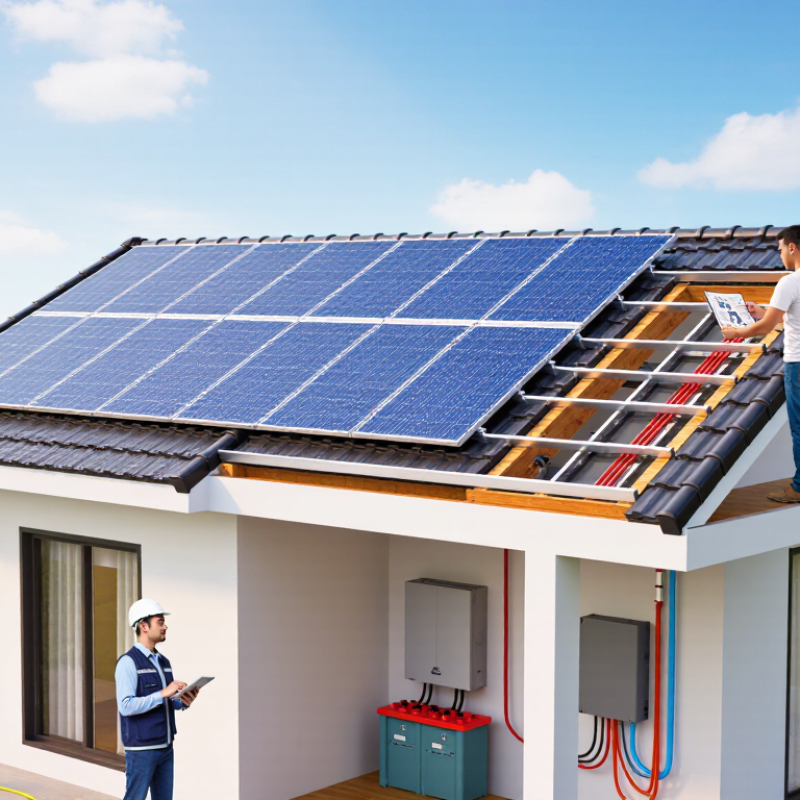
How to Upgrade an Existing Home Solar Power System?

Assess Your Current Solar Power System and Upgrade Goals

How to Upgrade an Existing Home Solar Power System?

Assess your current solar system before buying new equipment. Review twelve months of electricity bills, inverter records, and monthly production data. Compare actual output with the original design estimate. NREL’s PV Lifetime Project reports median module degradation of about 0.5% per year. A ten-year-old array may still operate well. A sudden output drop suggests shading, wiring faults, soiling, or inverter problems.

Inspect the roof, mounting hardware, cables, disconnects, and battery location. Check whether your inverter supports additional panels or storage. Electrical capacity matters too. Your service panel may need evaluation before expansion. Define the upgrade goal clearly: lower evening bills, backup essential circuits, electric vehicle charging, or greater daytime production. These goals require different equipment and wiring. The cheapest upgrade may not be the best one. That deserves honest review.

Tips: Record your largest hourly loads, not only daily consumption. Mark refrigerators, pumps, internet equipment, and medical devices needing backup. Ask an installer for a shading analysis and a battery load calculation. Request performance estimates using your local weather data. Review warranties, system age, and remaining roof life. A battery cannot fix poor solar production. Neither can extra panels hide inaccurate monitoring. The U.S. Department of Energy notes that battery performance depends on usable capacity, power rating, efficiency, and operating conditions. Leave room for uncertainty.

Check System Compatibility, Capacity, and Local Electrical Requirements

How to Upgrade an Existing Home Solar Power System?

Upgrading an existing solar system starts with compatibility, not shopping. Check the inverter’s maximum voltage, current range, and communication limits. Older inverters may not support newer panels or batteries. Review panel output, roof orientation, shading, and the condition of mounting hardware. A system can appear healthy while aging connectors or damaged insulation quietly reduce performance.

Capacity must match household demand and the electrical service. Compare recent electricity bills with the system’s actual production, especially during winter and cloudy weeks. A larger battery may sound attractive, but the main service panel, backup loads, and inverter output can limit its usefulness. Local electrical requirements also matter. A licensed electrician should verify grounding, disconnects, wiring, meter placement, and available breaker capacity. Permits and utility approval may be required before installation or grid connection.

Tips: Photograph labels and cable routes before changes. Request a written load calculation. Ask whether the proposed upgrade works during an outage. Leave room for inspection corrections; plans are sometimes too optimistic. Do not assume existing wiring is reusable. A careful site assessment may reveal heat damage, moisture, or undersized conductors that are invisible from the driveway. Share the original installation documents when available, then confirm every specification against current local rules.

Choose Between More Panels, Battery Storage, or an Inverter Upgrade

How to Upgrade an Existing Home Solar Power System?

Choose Between More Panels, Battery Storage, or an Inverter Upgrade

Upgrading a solar system starts with actual household data, not a sales estimate. Review twelve months of electricity bills and check daytime production. A monitoring report can reveal shading, seasonal drops, or frequent inverter clipping. More panels may suit homes with high daytime demand. However, roof space, structural strength, panel orientation, and local electrical limits matter. Extra panels will not solve every problem.

Battery storage becomes valuable when electricity use continues after sunset. It can store midday solar power for evening cooking, cooling, or electric vehicle charging. Measure your evening consumption carefully. A battery sized only for emergencies may be cheaper, while whole-home backup requires greater capacity. Some households expect several cloudy days of independence. That expectation can be unrealistic.

An inverter upgrade deserves attention when the existing unit is aging, repeatedly shutting down, or limiting new panel capacity. A larger inverter is not automatically better. Voltage ranges, wiring, protection devices, and grid connection rules must match. A qualified installer should inspect the system, calculate compatibility, and confirm required permits. It is easy to focus on headline capacity and overlook installation space. That mistake can create heat, noise, or expensive rewiring. Recheck the design after receiving a detailed load calculation.

Plan the Installation, Permits, and Required Safety Improvements

Upgrading an existing home solar system is not simply adding more panels. Load growth, roof condition, inverter limits, and utility rules must be checked together. IEA PVPS reported about 456 GW of new photovoltaic capacity worldwide in 2023, lifting global capacity above 1.6 TW. That growth makes careful local planning more important, not less. Measure twice.

A practical site review should record panel age, roof penetrations, shading, cable routes, and main-service capacity. Ask an electrician to test grounding, bonding, overcurrent protection, and arc-fault protection. Battery additions may require a larger service, dedicated disconnects, ventilation, and fire-rated clearances. NFPA estimated 1,388,500 U.S. fires in 2023, with property damage exceeding 22 billion dollars. Solar equipment does not cause every fire, but neglected wiring can increase consequences. I would not trust old labels or undocumented repairs.

Permits usually include building and electrical approval, plus utility interconnection permission. Some areas also require fire-department review for energy storage. Prepare a single-line diagram, equipment specifications, roof attachment details, load calculations, shutdown procedures, and battery-location drawings. The U.S. Department of Energy’s SolarAPP+ process evaluation shows automated review can speed residential permitting, but local authorities still control approval. A perfect plan rarely survives the first roof inspection. Leave room for corrections. After approval, schedule inspection before energizing the upgraded system.

How to Upgrade an Existing Home Solar Power System? - Plan the Installation, Permits, and Required Safety Improvements

Upgrade Area What to Review Typical Requirement or Planning Range Documents or Checks Safety Improvement
System Assessment Existing array, inverter, wiring, roof condition, grounding, and equipment age Complete an on-site inspection before adding equipment; older components may not be compatible with new equipment As-built drawings, equipment labels, electrical inspection, production history, and roof inspection Identifies overloaded circuits, damaged conductors, roof defects, and obsolete protection devices
Energy and Load Analysis Electricity consumption, peak demand, future loads, and backup-power goals Review at least 12 months of utility usage; include planned loads such as heat pumps, electric vehicles, or induction cooking Utility bills, interval data where available, appliance ratings, and backup-load schedule Prevents undersizing and helps separate essential circuits from high-demand loads during outages
Roof and Structural Review Roof age, remaining service life, framing, attachment points, and available surface area Repair or replace a roof with insufficient remaining life before installing new modules; verify structural capacity for added dead load and wind forces Roof inspection, structural calculations when required, site measurements, and attachment layout Reduces water-intrusion risk and ensures mounting hardware is attached to suitable structural members
Electrical Service Capacity Main service rating, panel busbar rating, breaker spaces, feeder capacity, and interconnection method Common residential services are 100 A, 150 A, or 200 A; actual allowable solar backfeed depends on the equipment and local code calculations Panel schedule, load calculation, utility interconnection requirements, and one-line diagram Avoids excessive busbar loading and identifies whether a load-side or supply-side connection is appropriate
Inverter Compatibility Existing inverter type, maximum DC input, voltage range, phase configuration, and communication capability Do not mix equipment unless the electrical ratings, control functions, and installation instructions permit the combination Nameplate data, installation manuals, firmware requirements, string design, and compatibility review Prevents overvoltage, excessive current, nuisance shutdowns, and unsafe control interactions
Battery Storage Usable capacity, power output, location, ventilation, temperature range, and backup-load priorities Size capacity from the required energy duration and power from simultaneous loads; installation location and spacing are governed by local fire and electrical rules Battery specifications, equipment clearances, wall or pad details, disconnect locations, and emergency response information Adds controlled energy storage, visible disconnects, protected equipment, and clearly identified emergency shutoff points
Rapid Shutdown and Disconnects Module-level or array-level shutdown, DC disconnects, AC disconnects, and equipment labeling Many jurisdictions require rapid-shutdown functions for rooftop PV; exact boundary and shutdown voltage requirements depend on the adopted electrical code One-line diagram, shutdown equipment listings, labels, placards, and commissioning test results Helps firefighters and maintenance personnel reduce energized conductors during an emergency
Grounding and Bonding Equipment grounding conductors, bonding jumpers, grounding electrode system, and corrosion-resistant connections All exposed metal components and electrical equipment must be bonded according to the adopted electrical code and listed installation instructions Continuity testing, conductor sizing, connection inspection, and grounding electrode review Provides a low-impedance fault path and reduces shock and fire hazards
Overcurrent and Surge Protection Circuit breakers, fuses, surge protective devices, conductor ampacity, and environmental exposure Protection must be matched to conductor ampacity, equipment ratings, and the available fault current; surge protection may be required or recommended by the design Short-circuit calculations, breaker specifications, fuse ratings, and surge-protection inspection Limits damage from overloads, short circuits, and transient voltage events
Permits and Plan Review Building, electrical, structural, fire, and battery permits required by the local authority Permit requirements vary by municipality and project scope; obtain approval before construction begins Site plan, equipment schedule, structural details, electrical one-line diagram, load calculations, and permit application Creates an official safety review and documents compliance with locally adopted codes
Utility Interconnection Export limit, anti-islanding protection, meter configuration, approval process, and operating agreement Utility approval is generally required before parallel operation; export limits and fees vary by service territory Interconnection application, single-line diagram, inverter certification, utility agreement, and permission to operate Confirms safe coordination with the electric grid and prevents unauthorized energization
Inspection and Commissioning Mechanical installation, torque settings, polarity, insulation, voltage, shutdown response, and monitoring Complete required inspections and functional tests before final approval and normal operation Inspection record, test results, updated drawings, equipment manuals, warranties, and homeowner training Verifies that protective functions operate correctly and that the homeowner knows how to isolate the system

Note: Permit, structural, fire, utility, and electrical requirements vary by location and by the scope of the upgrade. Confirm the current requirements with the local authority, utility, and a qualified electrical professional before work begins.

Test, Monitor, and Maintain the Upgraded Solar Power System

How to Upgrade an Existing Home Solar Power System?

An upgraded solar system needs more than new panels or a larger battery. Test every component after installation, including wiring, protection devices, inverter settings, and battery connections. A qualified electrician should verify polarity, grounding, insulation resistance, and cable torque according to local requirements. Record the results with the installation date. Small errors can become expensive faults.

Monitor the system during clear and cloudy days. Compare panel output, household consumption, battery state of charge, and inverter temperature. A useful baseline shows expected production at different times. Set alerts for unusual voltage, repeated shutdowns, rapid battery drain, or rising temperatures. Check the monitoring data weekly, not only when electricity bills increase. A perfect dashboard can still hide a loose connection.

Tips: Keep vents free from dust and leaves. Inspect visible cables after severe weather. Clean panels only when safe and necessary, using suitable methods that prevent surface damage. Review battery temperature and charging limits every few months. Arrange a professional inspection at least annually, especially after adding storage or changing system capacity. Do not open energized equipment. Documentation also matters; keep test reports, fault records, and updated wiring diagrams together. I have seen homeowners focus on higher output while overlooking maintenance intervals. That mistake is easy to repeat. Track performance before and after each upgrade, then question results that seem unusually good or poor.

How to Upgrade an Existing Home Solar Power System

Monthly solar energy production before and after increasing system capacity from 4.8 kWp to 7.2 kWp. Compare the readings to test performance, monitor seasonal output, and identify maintenance needs.

The upgraded system produces more energy in every month, while seasonal changes remain visible. Large deviations from expected output may indicate shading, dirt, wiring faults, inverter issues, or the need for professional inspection.

FAQS

Why should I assess my existing solar system before upgrading?

Review twelve months of bills, inverter records, and monthly production. Compare actual output with the original estimate. A ten-year-old array may still work well. A sudden drop needs investigation.

What can cause a sudden reduction in solar production?

Common causes include shading, dirty panels, wiring faults, and inverter problems. Check nearby trees and visible cable damage. Extra panels may not solve poor production.

How should I define my solar upgrade goal?

Decide whether you want lower evening bills, backup power, electric vehicle charging, or more daytime production. Each goal needs different equipment and wiring. The cheapest option may not fit.

What should I inspect before adding panels or storage?

Inspect the roof, mounting hardware, cables, disconnects, and battery location. Check roof age and remaining service life. Also review panel age and cable routes.

Can my current inverter and electrical panel support an upgrade?

Not always. Confirm the inverter’s additional panel and storage limits. Have an electrician evaluate service capacity, grounding, bonding, and protection equipment. Guessing here is risky.

How can I calculate the battery size I actually need?

Record your largest hourly loads, not just daily usage. Mark refrigerators, pumps, internet equipment, and essential medical devices. Battery capacity, power rating, efficiency, and conditions all matter. A battery cannot fix weak solar production.

What safety improvements may be needed for a battery installation?

The project may require a larger service, dedicated disconnects, ventilation, and fire-rated clearances. Old labels and undocumented repairs deserve careful review. I would not assume existing wiring is adequate.

Which permits and documents are usually required?

Local approval commonly includes building, electrical, and utility interconnection permits. Some areas require fire-department review for storage. Prepare equipment specifications, load calculations, shutdown procedures, and battery-location drawings.

When can the upgraded system be energized?

Schedule the required inspection after installation and before energizing. Inspectors may request corrections, even with a careful plan. Leave room for changes. Perfect plans rarely stay perfect.

Conclusion

Upgrading a home solar system begins with a clear assessment of its current condition, energy production, age, and future goals. Homeowners should review electricity usage, inspect the panels, inverter, wiring, and mounting structure, and identify whether the priority is greater energy output, backup power, improved efficiency, or better monitoring. Before selecting equipment, confirm compatibility among existing components, available roof or ground space, system capacity, and local electrical requirements. Professional guidance may be necessary to determine whether the system can safely support additional equipment.

The next step is choosing the most suitable improvement, such as adding solar panels, installing battery storage, or replacing an undersized or outdated inverter. A careful plan should include system design, installation scheduling, permits, inspections, and safety improvements. After installation, the upgraded system should be tested under normal operating conditions, connected to reliable monitoring tools, and checked for proper performance. Regular inspections, cleaning, and maintenance can help protect equipment, maintain efficiency, and extend the system’s useful life. This practical approach explains how to upgrade an existing home solar power system safely and effectively.

Ethan

Ethan

Ethan is a seasoned marketing professional with a deep expertise in our company's innovative product line. With a passion for sharing knowledge and insights, he takes the lead in regularly updating our corporate blog, where he explores industry trends, product features, and effective marketing......