Top 10 Types of Solar Pumps That Run Without a Battery?

Time:2026-09-19 Author:Oliver
0%

Can solar pumps run without a battery pack? Yes, but the practical answer depends on sunlight, water demand, and storage design. A battery is not always essential. In many systems, a raised tank stores water instead of electricity. The pump works during daylight, then gravity supplies water after sunset.

This approach matters because agriculture consumes about 70% of global freshwater withdrawals, according to the FAO’s AQUASTAT data. Meanwhile, IRENA reported that global solar photovoltaic capacity reached approximately 1,419 gigawatts by the end of 2023. Solar pumping is becoming more accessible, yet performance still depends on correct sizing. A cloudy afternoon can reduce flow sharply. That detail is often ignored.

Solar irrigation specialist Dr. M. A. Ghoneim explains, “Water storage can replace battery storage when pumping schedules match sunlight.” This principle guides many battery-free designs, although it should not be treated as universal advice. The World Bank’s report, Solar Water Pumping for Sustainable Water Supply, also emphasizes matching pump capacity with local water demand, solar conditions, and storage needs.

This guide examines the top 10 types of solar pumps that run without a battery. It compares direct-coupled, submersible, surface, centrifugal, helical-rotor, and hybrid configurations. Each design behaves differently beside a shallow well, a deep borehole, or a rooftop tank. Some deliver strong midday flow. Others provide steadier output through water storage.

The imperfect part is simple: battery-free does not mean maintenance-free. Dirty panels, undersized pipes, and dry wells can still stop a system. Good engineering remains necessary.
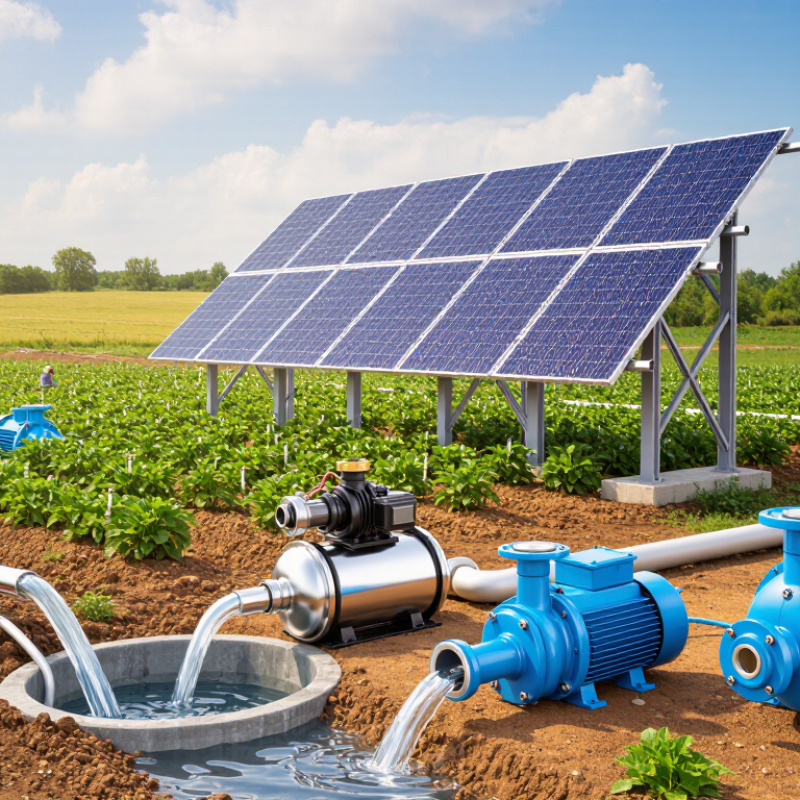
Top 10 Types of Solar Pumps That Run Without a Battery?

How Battery-Free Solar Pumps Work

Top 10 Types of Solar Pumps That Run Without a Battery

Battery-free solar pumps use sunlight as their operating signal. Solar panels produce direct current, while a controller adjusts voltage and frequency for the motor. A maximum power point tracker helps capture changing sunlight. Water is stored in a tank, not electricity in a battery. The ten common configurations include submersible centrifugal, surface centrifugal, diaphragm, piston, helical-rotor, progressive-cavity, peristaltic, rotary-vane, axial-flow, and mixed-flow pumps. Direct-coupled systems usually start after sufficient morning irradiance appears. Their flow rises near noon and weakens under clouds.

The practical detail matters. A 500-watt array may fill an elevated tank slowly at 8 a.m., then deliver stronger flow at noon. During heavy cloud, the pump may stop completely. That is normal. A controller can provide soft starting and protect the motor from dry running, but it cannot create missing sunlight. Some systems use capacitors for brief startup support, yet they remain battery-free. ESMAP’s Solar Water Pumping for Sustainable Water Supply highlights water storage as a simpler alternative to electrical storage in many rural designs.

The economics are improving. IRENA’s Renewable Power Generation Costs in 2023 reported a 90% decline in utility-scale solar photovoltaic electricity costs between 2010 and 2023. However, panel sizing, well depth, pipe friction, and seasonal sunlight still decide performance. I would not oversell these pumps. A poorly sized system can produce disappointing water before midday. Field measurements matter more than attractive specifications.

Direct-Drive Solar Water Pump Systems

Direct-drive solar water pumps operate without batteries. They send electricity from photovoltaic panels straight to the pump controller and motor. When sunlight increases, water flow usually increases. When clouds arrive, output may fall within minutes.

Common battery-free designs include submersible, surface centrifugal, helical rotor, diaphragm, piston, booster, floating, irrigation, livestock, and fountain pumps.

Submersible pumps suit deep wells, while surface pumps work better with shallow water sources. Helical rotor pumps can lift water steadily at low flow rates. Centrifugal models often deliver higher volumes when sufficient sunlight is available.

In field installations, correct sizing matters more than impressive pump ratings. The panel array should match the pump’s voltage, current, and daily water demand. A storage tank can replace the battery’s role by holding water for evening use. This approach reduces battery maintenance and avoids capacity loss during hot weather.

Keep the intake screen clean. Sediment can damage moving parts and reduce flow. A dry-run sensor also protects the pump when a well level drops.

Direct drive is not perfect. Early morning watering may be weak, and heavy clouds can interrupt service. That limitation deserves honest planning.

Measure the well depth, pipe length, elevation, and seasonal sunlight before installation. A smaller pump with realistic expectations may outperform a larger pump installed without site data.

Top Ten Battery-Free Solar Pump Types

Top Ten Battery-Free Solar Pump Types

Battery-free solar pumps work only when sunlight is available, so water storage replaces electrical storage. The ten practical types include direct-drive DC submersible, surface centrifugal, diaphragm, piston, helical-rotor, brushless DC, AC pumps with variable-frequency drives, multistage, floating, and solar-thermal pumps. Each design fits a different well depth, flow target, and maintenance skill level.

A direct-drive submersible pump suits deep wells and clean water. A surface centrifugal pump works better for shallow sources. Diaphragm and piston pumps handle lower flow, higher pressure, and careful dosing. Helical-rotor pumps deliver steady output from deeper wells. Floating pumps help ponds, but algae can block intake screens. AC systems offer wider motor choices, although their inverter adds cost and another failure point. Solar-thermal pumps are less common and depend heavily on heat collection conditions.

IRENA reported a global weighted-average solar PV electricity cost of USD 0.044 per kilowatt-hour in 2023. That supports battery-free designs where daytime pumping is acceptable. FAO reports that agriculture uses about 70% of global freshwater withdrawals, making efficient pumping and controlled irrigation essential. Yet these figures do not guarantee savings at every site. Poor sizing still wastes water and money.

Tips: Store water in an elevated tank, not a battery. Match pump output to midday sunlight. Check well recovery rates before installation. Use a screened intake and protect cables from animals. One honest warning: “battery-free” does not mean maintenance-free. Dust, low winter sun, and cloudy afternoons remain real operating limits.

These ten pump types can operate directly from photovoltaic power without battery storage. The chart shows representative practical lifting heights for common direct-solar configurations; actual performance depends on solar irradiance, pump size, water flow, pipe length, and system design.

Choosing the Right Pump for Water Source and Demand

Choosing a batteryless solar pump starts with the water source, not the panel count. A shallow well may suit a surface centrifugal pump. A deep borehole usually needs a submersible centrifugal pump. Ten practical options include submersible centrifugal, surface centrifugal, axial-flow, helical-rotor, diaphragm, piston, screw, gear, peristaltic, and jet pumps. Each responds differently to head, flow, sand, and changing sunlight.

FAO AQUASTAT estimates that agriculture uses about 70% of global freshwater withdrawals. That makes efficient matching important. For drip irrigation, a positive-displacement pump, such as a piston or diaphragm model, handles pressure better. For ponds and open canals, axial-flow pumps move large volumes at low head.

Helical-rotor and screw pumps can lift water steadily from deeper sources, but their output remains modest. Sand can shorten their working life.

A batteryless system pumps strongest around midday. Store water in a raised tank instead. UNICEF and WHO’s 2023 Joint Monitoring Programme reported that 2.2 billion people lacked safely managed drinking water in 2022. Reliable sizing therefore matters. Measure static water level, dry-season depth, pipe length, and daily demand. IRENA’s Renewable Power Generation Costs report shows solar PV costs have fallen sharply since 2010, yet cheap panels cannot fix poor hydraulic design. A sunny-hour estimate can still be wrong. Field conditions change. Include a dry-run sensor, proper filtration, and a realistic water-storage margin.

Installation, Operation, and Maintenance Considerations

Top 10 Types of Solar Pumps That Run Without a Battery?

Battery-free solar pumps depend on sunlight and usually store water instead of electricity. Common options include submersible, surface, centrifugal, diaphragm, helical rotor, and positive-displacement pumps. Their installation starts with accurate head and flow calculations. A small error here can cause poor output. Place panels away from shade, even during afternoon hours, and face them toward the strongest daily sun. Use correctly sized cables, waterproof connectors, and a controller with dry-run protection. The pump should sit above sediment where practical. Keep the intake screen accessible.

Operation changes with weather. Flow may rise sharply at noon and drop under clouds. A float switch can prevent overflow, while a check valve helps stop reverse drainage. For livestock or irrigation, a raised tank provides a simple buffer. It is less complicated than adding a battery, but it needs enough storage capacity. Do not judge performance only by peak sunlight. Early morning and late afternoon output may be too weak for the selected pump.

Maintenance is modest, not absent. Inspect panels monthly for dust, bird deposits, and new shade from growing trees. Clean them with soft water and a non-abrasive cloth when necessary. Check the intake, pipe joints, and mounting frame after heavy rain. Listen for grinding or irregular pulsing. These signs may indicate sand damage, blockage, or a loose connection. A practical weakness remains: many installations are sized from optimistic sunlight data. Reviewing real flow records after the first month can reveal that the original design needs adjustment.

FAQS

How do battery-free solar pumps operate?

Solar panels power the motor directly during daylight. A controller adjusts voltage and frequency. Water storage replaces electrical storage. No battery is required.

What happens during cloudy weather?

Pump flow usually weakens when sunlight drops. Heavy clouds may stop pumping completely. This is normal, not necessarily a fault.

Which pump type suits a deep well?

A submersible pump often suits deep wells with clean water. A helical-rotor pump can provide steady output. Check well depth and recovery first.

When should a surface centrifugal pump be used?

Surface centrifugal pumps work better with shallow water sources. They need suitable suction conditions and low intake blockage. They are not ideal for every well.

How can water storage improve a battery-free system?

Store pumped water in an elevated tank. The tank can supply water after sunset or during short clouds. It must hold enough water for daily demand.

What installation details affect performance?

Avoid shade on the panels, including afternoon shade. Use correctly sized cables and waterproof connectors. Keep the intake screen accessible. Small design errors matter.

What maintenance does the system need?

Inspect panels monthly for dust, bird deposits, and new tree shade. Check pipes, joints, cables, and intake screens. Listen for grinding or irregular pulsing.

Does battery-free mean maintenance-free?

No. Dust, sediment, algae, and loose connections still cause problems. A floating pump may need frequent screen cleaning. That part is easy to underestimate.

How should pump performance be evaluated?

Measure real water flow during morning, noon, and afternoon. Do not rely only on attractive specifications. A system may look adequate but disappoint before midday.

What is the main weakness of battery-free solar pumping?

Output follows sunlight instead of demand. Winter sunlight, clouds, deep wells, and pipe friction can reduce delivery. I would not oversell the design.

Conclusion

Solar pumping technology can operate without stored electricity, but can solar pumps run without a battery pack? Yes, when they use a direct-drive system powered by photovoltaic panels. Pump output changes with sunlight, so water is commonly delivered during daylight into a tank for later use. This approach reduces battery replacement, avoids energy-storage losses, and can simplify system design. The ten main battery-free options include submersible, surface, centrifugal, diaphragm, piston, helical-rotor, progressive-cavity, positive-displacement, floating, and low-voltage direct-current pumps.

Choosing the right type depends on the water source, required flow rate, lifting height, water quality, and daily demand. Submersible models suit wells and deep sources, while surface pumps work well with tanks, ponds, and shallow supplies. Installation should include correctly sized solar panels, suitable pipework, protection from dry running, and secure mounting. Regularly cleaning panels, checking filters and connections, and inspecting the pump can maintain reliable performance. Where sunlight varies, a storage tank or water-management schedule is often more practical than adding batteries.

Oliver

Oliver

Oliver is a seasoned marketing professional with a wealth of expertise in driving brand awareness and engagement. With a deep understanding of our company's product offerings, he consistently delivers high-quality content that enriches our professional blog. His insights not only shed light on......