10 Best Reasons Why Do Solar Lights Stop Working After Rain?

Time:2026-06-13 Author:Mason
0%

When considering outdoor lighting, many homeowners choose solar lights for their eco-friendliness and easy installation. However, a common concern arises: why do solar lights stop working after rain? This issue can frustrate many users who depend on these lights for safety and aesthetics. Some might assume that rainwater is the culprit, but the reasons can be more complex.

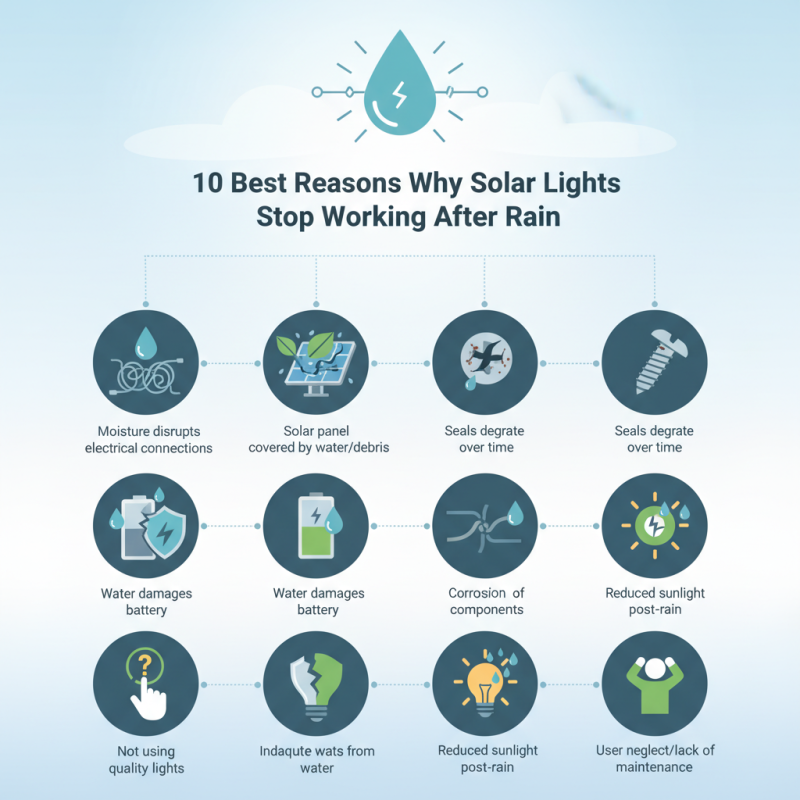
The truth is, several factors contribute to the malfunction of solar lights after rainfall. For instance, moisture can disrupt electrical connections within the light unit. Additionally, if the solar panel is covered by water or debris, it may hinder the light's ability to recharge effectively. Users often fail to consider that prolonged exposure to water can damage the battery and other components.

Moreover, many solar lights do not have adequate waterproofing, leading to reduced performance after rainfall. This raises an important question for homeowners: Are you using quality solar lights with sufficient protection against the elements? Reflecting on these issues can help improve the longevity of your outdoor lighting solution.
10 Best Reasons Why Do Solar Lights Stop Working After Rain?

Understanding the Basics of Solar Lights and Their Functionality

Solar lights operate by converting sunlight into energy. Their design includes solar panels, batteries, and LED lights. During clear days, sunlight charges the batteries. When night falls, the stored energy powers the lights. However, rain can impact their functionality, raising concerns for users.

Moisture can seep into the solar panels or connections, leading to reduced efficiency. Water might also interfere with the charging process, preventing it from reaching full capacity. Many solar lights are not fully waterproof, which increases vulnerability. Even with some water resistance, continuous rain can reveal flaws in design or materials.

Users often overlook the importance of regular maintenance. Checking for dirt and debris on solar panels is crucial for optimal performance. Positioning the lights correctly for maximum sun exposure also matters. Sometimes, we assume these lights are perfect, but they are not. Regular observations help identify issues faster, ensuring a longer lifespan for solar lights.

10 Best Reasons Why Do Solar Lights Stop Working After Rain?

Reason Description Prevention Tips
Water Damage Excessive rain may lead to water entering the light casing. Ensure lights are waterproof and sealed properly.
Corroded Connections Moisture can cause corrosion in electrical connections. Use corrosion-resistant connectors and sealants.
Dirt and Debris Heavy rain can wash dirt onto solar panels, decreasing efficiency. Regularly clean solar panels to maintain optimal performance.
Battery Overheating Prolonged exposure to water may cause battery issues. Place batteries in a ventilated, dry location.
Defective Solar Panel Rain can exacerbate existing issues with solar panels. Regularly inspect panels for any signs of damage.
Insufficient Sunlight Heavy clouds or rain can limit sunlight absorption. Position lights to maximize sun exposure.
Short Circuit Moisture could lead to short circuits in the light's wiring. Use waterproof wiring and enclosures.
Faulty Sensors Sensors can malfunction due to water exposure. Test sensors regularly and replace if faulty.
Overcharging Prolonged rain can cause battery overcharging issues. Install charge controllers to prevent overcharging.
Aging Components Older lights may fail more frequently after adverse weather. Consider replacing older models with newer ones.

Common Reasons Solar Lights Malfunction After Rain

Solar lights are convenient alternatives for outdoor lighting, but they often face malfunctions after heavy rain. Understanding common reasons for these issues can help users maintain their solar lights effectively.

One main reason is water intrusion. Many solar lights are designed to be weather-resistant but not waterproof. Prolonged exposure to rain can seep into the battery compartment, damaging the battery and circuit board. The National Renewable Energy Laboratory estimates that moisture is responsible for about 30% of solar light failures. Regular inspection of seals and joints can prevent this issue.

Another factor is the degradation of solar panels. Rain can wash away dirt, but it may also lead to corrosion, particularly if water collects on the surface. A report from Solar Energy Industries Association highlights that ineffective maintenance leads to a 15% drop in solar efficiency over time. Cleaning the panels regularly and ensuring they are angled correctly can help enhance their lifespan.

**Tips:** Always check for cracks in the casing after heavy rains. Use waterproof sealants if necessary. Additionally, consider replacing batteries every few years to avoid performance issues. Regular care can ensure your solar lights continue to shine brightly, regardless of the weather.

Impact of Weather Conditions on Solar Light Performance

Weather conditions significantly influence the performance of solar lights. Rain and humidity can hinder their effectiveness. For instance, excessive moisture can lead to corrosion. Corrosion affects internal components and connection points. This can cause solar lights to malfunction or die prematurely.

Another point to consider is the accumulation of water on solar panels. Water droplets may block sunlight from reaching the solar cells. Less sunlight means reduced energy production. Some solar lights are also designed with lower sensitivity to light levels. After a rainy night, they may struggle to turn on, thinking it’s still dark.

Finally, the quality of the solar light's components matters. Low-quality materials may not withstand harsh weather. Prolonged exposure to rain can seep into connections, creating short circuits. Such issues remind users to invest in reliable products. It’s always better to evaluate potential maintenance or replacement needs after severe weather.

Preventive Measures to Ensure Solar Lights Operate Effectively

Rain can compromise the performance of solar lights. To ensure they continue functioning effectively, several preventive measures should be considered. Proper placement is crucial. Solar lights should be installed in an area that receives ample sunlight during the day. Shady spots hinder charging, reducing the lights' ability to shine brightly at night. If your solar lights are often surrounded by tree branches or tall buildings, they may not be getting enough sunlight.

Regular maintenance is another key factor. Ensure that the solar panels are free from dirt and debris. Even a small layer of dust can block sunlight. A gentle wipe with a soft cloth can keep them clean. Additionally, check the batteries periodically. If they are deteriorating, they may need replacement. Corrosion at the terminals can also hinder performance. Keeping the terminals clean can help maintain the connection.

Lastly, consider weatherproofing your solar lights. Some models may not be entirely waterproof. A protective casing or housing can shield them from excessive moisture. Ensure that any covers or seals are intact. Addressing these small issues can significantly enhance the durability and function of solar lights.

Troubleshooting Tips for Non-Functional Solar Lights Post-Rain

After heavy rain, many solar lights fail to function. This issue can often be traced back to several common factors. Water may seep into the solar panel or battery compartment, causing electrical issues. Inspect the lights carefully. Look for signs of moisture or corrosion. These are red flags that indicate water damage.

Another key aspect is the solar panel. If dirt, debris, or water residue covers it, sunlight absorption decreases. Cleaning the panel after rain can improve performance. Use a soft cloth and mild detergent. This simple step often gets overlooked.

Batteries can also be affected by moisture. Poor-quality batteries may struggle after rain exposure. Check if the batteries are properly sealed and functioning. If they are weak or damaged, consider replacing them. Reflecting on these details can help maintain your solar lights effectively. Regular maintenance is crucial. Even minor oversight can lead to non-functional lights.

Reasons Why Solar Lights Stop Working After Rain

FAQS

: Why do solar lights malfunction after heavy rain?

: Water intrusion into the battery compartment can damage parts and cause malfunctions.

What percentage of solar light failures is caused by moisture?

Moisture accounts for about 30% of solar light failures, according to estimates.

How often should I check the seals and joints of my solar lights?

Regular inspection of seals is essential to prevent water damage after heavy rains.

What can rain do to solar panels?

Rain can cause corrosion if it collects on panels and prevents them from absorbing sunlight.

How can I enhance the lifespan of my solar lights?

Regularly clean the solar panels and ensure they are positioned for maximum sunlight exposure.

What preventive measures should I take for solar lights?

Place lights in sunny areas and ensure they are debris-free for better charging.

How can I maintain the batteries in my solar lights?

Periodically check the batteries for deterioration and replace them every few years if necessary.

What should I do if my solar lights don’t work after rain?

Inspect for moisture damage, clean the panels, and check battery conditions for proper functioning.

Are all solar lights waterproof?

No, many are weather-resistant but not entirely waterproof; consider weatherproofing them.

What small issues should I address to improve solar light performance?

Ensure seals are intact, clean battery terminals, and regularly check for cracks in the casing.

Conclusion

The article titled "10 Best Reasons Why Do Solar Lights Stop Working After Rain?" explores the functionality of solar lights and the impact of weather on their performance. It outlines common reasons for malfunction, such as water infiltration, battery failure, and insufficient sunlight exposure post-rain. Understanding these factors is essential for maintaining solar lights, particularly in varying weather conditions.

Additionally, the piece offers preventive measures to enhance the durability of solar lights, including proper installation and regular maintenance. Troubleshooting tips are also provided for users facing non-functional solar lights after rain, helping them identify and resolve issues effectively. Ultimately, the article aims to clarify the question of why do solar lights stop working after rain and provides guidance for keeping them operational.

Mason

Mason

Mason is a seasoned marketing professional with a deep expertise in the company's offerings and a passion for driving brand awareness. With a strong background in digital marketing strategies, he has an innate ability to connect with diverse audiences and effectively communicate product benefits.......